Road Base Calculator for Lane Rebuilds, Re-Tops and Pads
Enter your project dimensions
Before a tape comes out, one choice has already set most of the tonnage: are you building a lane up from the subgrade, or putting a fresh lift over stone that is still down there under the ruts? A rebuild is measured in half-feet and a re-top in a couple of inches, and on a long Pennsylvania lane that difference is the whole load. This road base calculator will price either one, but only after you have decided which you are doing.
Rebuild or re-top, and how to tell which the lane needs
Dig a test hole in a wheel track with a mattock. If you go through 4 or 5 inches of stone before you reach undisturbed shale or clay, the base is intact and the lane wants a lift of fresh material and a regrade. If the mattock is in soil at two inches, or the hole fills with water while you stand there, the base is gone in that spot and stone alone will keep disappearing into it.
Most lanes are both. The straight, dry middle needs a re-top; the shaded low section by the spring seep needs a rebuild. Measure them as separate areas rather than averaging the two into one depth.
Measuring a lane that has already spread into the grass
Stone creeps sideways under traffic, so a lane built at 10 ft will often measure 13 across the loose edges. Order to the width you intend to keep, not the width the tape finds, or you pay to gravel the verge. Run the length along the center of the lane, on the ground rather than across the level, because the stone has to cover the surface as it lies.
A crown is not a measuring problem worth solving with arithmetic. Enter the depth you want down the wheel tracks and let the extra couple of inches in the middle come out of the ordering allowance.
Feeding a re-top and a soft section into the road base calculator
Three shapes are offered: rectangle, circle, and multiple areas, which holds up to five pieces and adds them together. Length, width and diameter go in as feet. Depth goes in as inches and the box takes anything from 0.25 to 24. Pick the material, leave the ten percent for compaction and spillage ticked, or untick it, then press the calculate button for cubic yards, tons and cubic feet at once. The result can be sent to yourself with Email my quote.
Example only, not a specification. A 240 ft lane kept at 11 ft wide, re-topped with 3 inches of 2A modified, with one 18 ft section by the seep rebuilt to an extra 4 inches on top of that.
- Re-top area: 240 x 11 = 2,640 sq ft
- Re-top volume: 2,640 x 0.25 ft = 660 cu ft, which is 660 divided by 27 = 24.44 yd3
- Soft section: 18 x 11 = 198 sq ft at 4 inches, so 198 x 0.333 = 66 cu ft, or 2.44 yd3
- Both areas: 26.88 yd3
- Tons at 1.50: 26.88 x 1.5 = 40.3 tons
- With the ten percent ticked: 29.57 yd3, about 44.3 tons
Four inches, six or eight, by what actually drives on it
Enter the finished compacted depth, not the loose thickness the pile makes when it is first spread. Four compacted inches suits light residential traffic on firm ground. Six is the working figure for everyday vehicles and delivery trucks. Eight to twelve belongs under parked equipment, on clay, or anywhere ruts have already appeared. Where the subgrade is soft or wet, woven geotextile under the stone keeps the two layers from mixing, and organic topsoil should come out first, since even a thick base will pull mud up through itself when it sits on turf.
Place and roll in lifts no deeper than 4 inches before the next one goes on, and slope the finished surface 2 to 3 percent off the center so water leaves at the sides. That slope matters more here than the extra inch of stone people argue about. Water held in a base is what freezes, and a lane that freezes and thaws all winter breaks up from the inside.
The soft spot that swallows the first load
A lane that has been re-stoned twice and still ruts in the same place is not short of material; it is short of drainage. Clean the ditch line, get the roof and gutter runoff away from the shoulder, and only then order stone for it. On the western hills, water soaking into clay on a slope is also what moves ground, so where the runoff is sent matters as much as what goes on top.
Plan the work for thawed, dried ground in spring through late fall. Base stone put down on frozen or muddy ground does not compact, and the tonnage is wasted.
Three results, and the one a 2A modified ticket uses
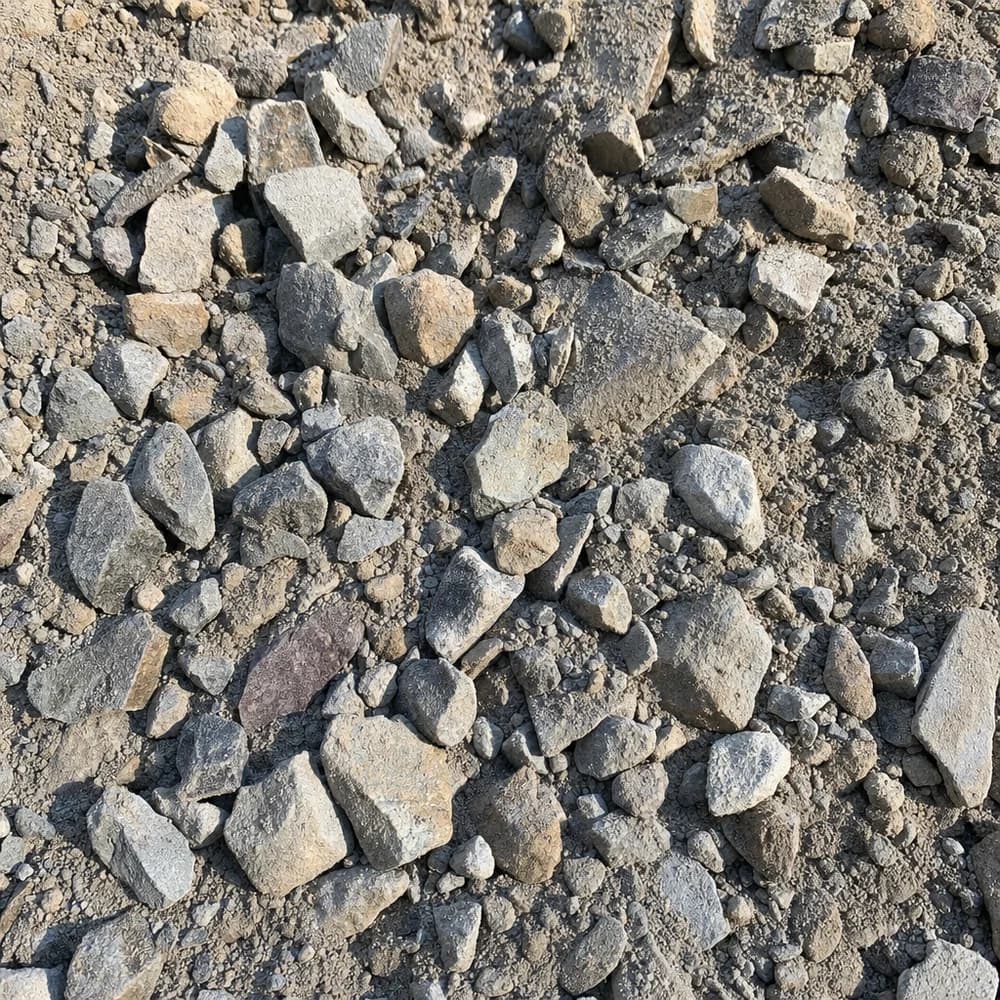
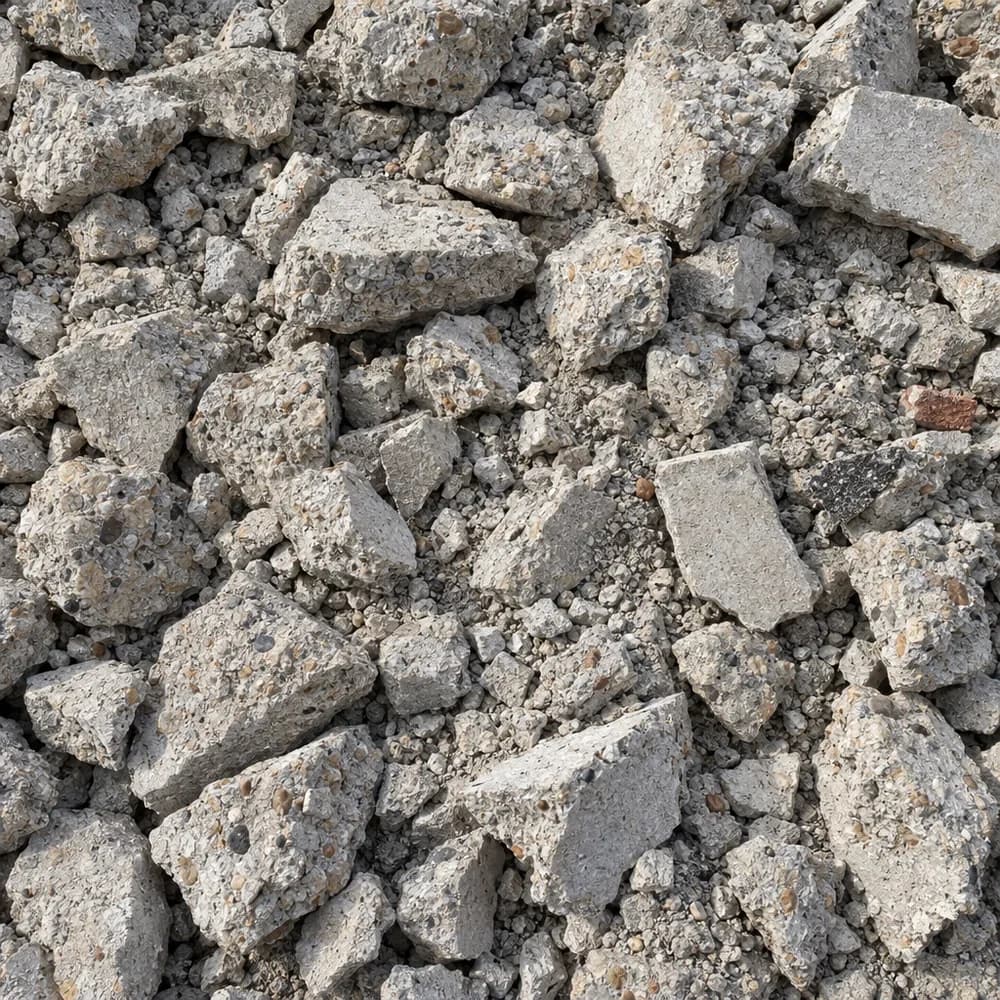
Road base is graded crushed stone with the fines left in, and this site publishes it at about 3,000 lb per cubic yard, or 1.50 tons per yard, which is approximate and heavier than any clean grade because the dust fills the voids. Cubic yards describe the size of the pile, tons are the unit the material is weighed and sold in, and cubic feet is the figure to use when a wheelbarrow of known capacity is doing the work.
Two more pads, same arithmetic. A 12 by 40 ft RV pad at 6 inches compacted is 480 sq ft by 0.5 ft, which is 240 cu ft, 8.89 yd3, and 13.3 tons. A 9 by 24 ft container pad at a full 10 inches is 216 sq ft by 0.833 ft, which is 180 cu ft, 6.67 yd3, and 10.0 tons. Containers land their weight on four corners, so the deeper figure and fabric underneath are worth it even on ground that looks sound.
Why a Pennsylvania ticket usually says 2A modified
The compacting base sold for lanes, pads and patio bases in this state is 2A modified, and that is the product this page sizes. The same weight of 1.50 tons per yard applies to Crusher Run, so the arithmetic does not change between them; what changes is the layer, since 2A modified carries the load under a lane or a pad and crusher run screeds flat under flatwork. Stay here when the line item reads 2A modified. Use the crusher run calculator when it reads crusher run. For a clean surface course over the finished base, or for drainage stone beside it, size that layer in the stone calculator, where the weights are lower.
Once the tonnage is set, open the product page, choose the quantity and the date there, and check the drop spot before the truck arrives. Delivery is arranged at checkout from your ZIP code, and on a long lane it is worth planning more than one drop rather than moving everything from the entrance. Awkward measurements can go through the contact page.
Common questions
Can I check a re-top figure on paper before I commit to it?
Yes. Multiply length by width for square feet, divide the depth in inches by 12, multiply through for cubic feet, divide by 27 for cubic yards, then multiply by 1.5 for tons. A three-inch lift on a long lane should land near a ton for every 72 square feet; if your figure is wildly off that, check whether the depth went in as feet.
The same pad priced in 2A modified and in clean stone came back at different tonnages. Which is correct?
Both are, for their own material. The tool sizes the volume from your measurements, then applies the published weight of the product you selected. Road base is quoted at 1.50 tons per cubic yard and clean crushed grades at 1.40, so an identical pad reads heavier in base stone.
Is the ten percent enough on a lift going over an existing lane?
It is enough for spillage and ordinary settling on sound ground. It does not cover ruts you are filling before the lift starts, and it does not cover a section where the old base has failed. Measure those as their own areas with their own depth instead of leaning on the percentage.
My lane climbs a bank and then flattens out at the barn. Do I measure it as one run?
Measure along the ground on the climb, since the tape reads longer there than a level line would, and split the climb from the flat if you plan different depths. Steep sections often lose surface material downhill, which is an argument for the deeper figure at the bottom rather than an average across the whole lane.
The lane opens into an L in front of the garage. How do I enter that?
Use multiple areas and treat the L as two rectangles that do not overlap. Take the lane its full length, then measure the apron from the point where the lane ends, not from the outside corner of the building, or the corner is counted twice. Up to five pieces can be entered and the tool returns one total.
Related calculators
Thirty tons. Zero delivery fees.
Road base priced per ton, hauled free, at lane quantities where hauling usually costs the most.