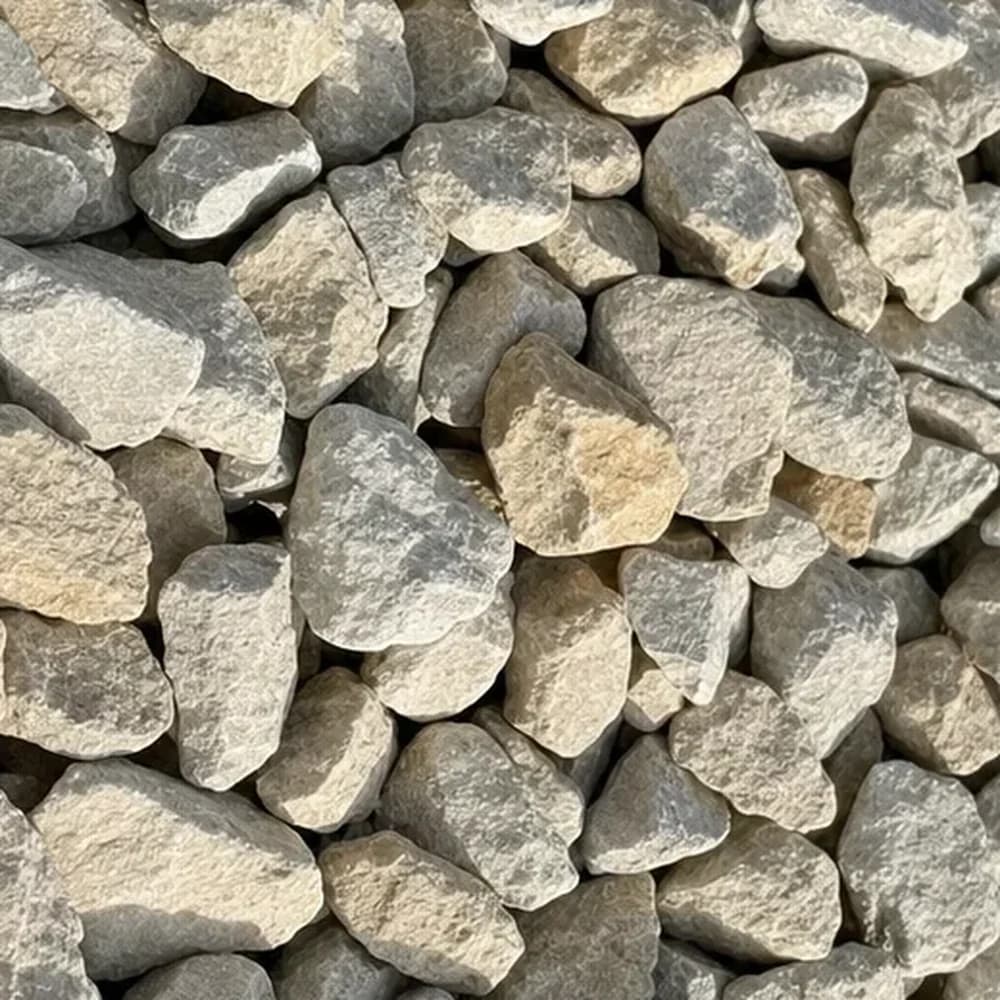
Walkway Gravel in Pennsylvania: 3/8 Inch Stone for Garden Paths
Walkway Gravel keeps Pennsylvania garden paths looking clean as seasons change, with a comfortable crushed-stone surface that drains naturally.
- Size: 3/8 inch
- Grading: Graded mix of stone sizes
- Type: Crushed stone
From $405 for 1 ton, delivery included (larger loads cost significantly less per ton)
Free delivery included
Free delivery anywhere in Pennsylvania
Pick a delivery date
Weekday delivery, earliest Oct 30
“Ordered walkway gravel from them and it showed up right on schedule. Really happy with how easy it was, 5 out of 5.”
Scott G. · Verified Buyer
Get a Free Quote
Fill out the form and our sales team will get back to you within the hour.
Size and Grading
- Size
- 3/8 inch
- Grading
- Graded mix of stone sizes
- Type
- Crushed stone
Through the ridges and valleys of South Central Pennsylvania the ground changes across a single property. Thin, stony soil on the slope, shale or limestone-derived clay in the flat, and a winter that freezes and thaws the same few inches over and over from December into March. That is what a garden path is built on here, and it is why a path that was simply raked onto the grass is a muddy trench by the second spring. Walkway gravel is the surface part of the answer; most of the rest of this page is about what goes underneath it.
Will a 3/8 inch path hold up on shale ground that freezes every winter?
It holds up if the water has somewhere to go. The stone itself is crushed, sized at three eighths of an inch, and supplied as a graded mix of stone sizes rather than a single-size chip, so the pieces knit into each other and the surface firms under foot traffic instead of scattering.
What breaks a path here is not frost by itself. It is water trapped under the path when the frost arrives. Repeated freeze-thaw lifts and drops a saturated layer through the winter, and by spring the surface is uneven and the stone has worked down into the soil. Fix the drainage, build on something that drains, and the same stone behaves completely differently.
Where does walkway gravel belong on a property with raised beds and a swing set?
Take one hypothetical back yard with three features in it.
The paths between a run of raised vegetable beds: this is the job. A narrow, firm, well-drained route that keeps boots out of the mud, easy to lay, easy to change when the beds move.
The route from the house down to a swing set: also this, right up to the edge of the play area. What it should not be is the play surface itself. Crushed three-eighths stone under a swing is sharp on a knee and it is not designed as fall material.
The pad where the boat or the RV parks: not this at all, and the reason is covered further down.
Can it be the finished surface, or does something have to go underneath?
It is a surface course. On firm, free-draining ground a thin layer straight onto a shaped and compacted subgrade can work for a light garden path, and plenty of people build them that way.
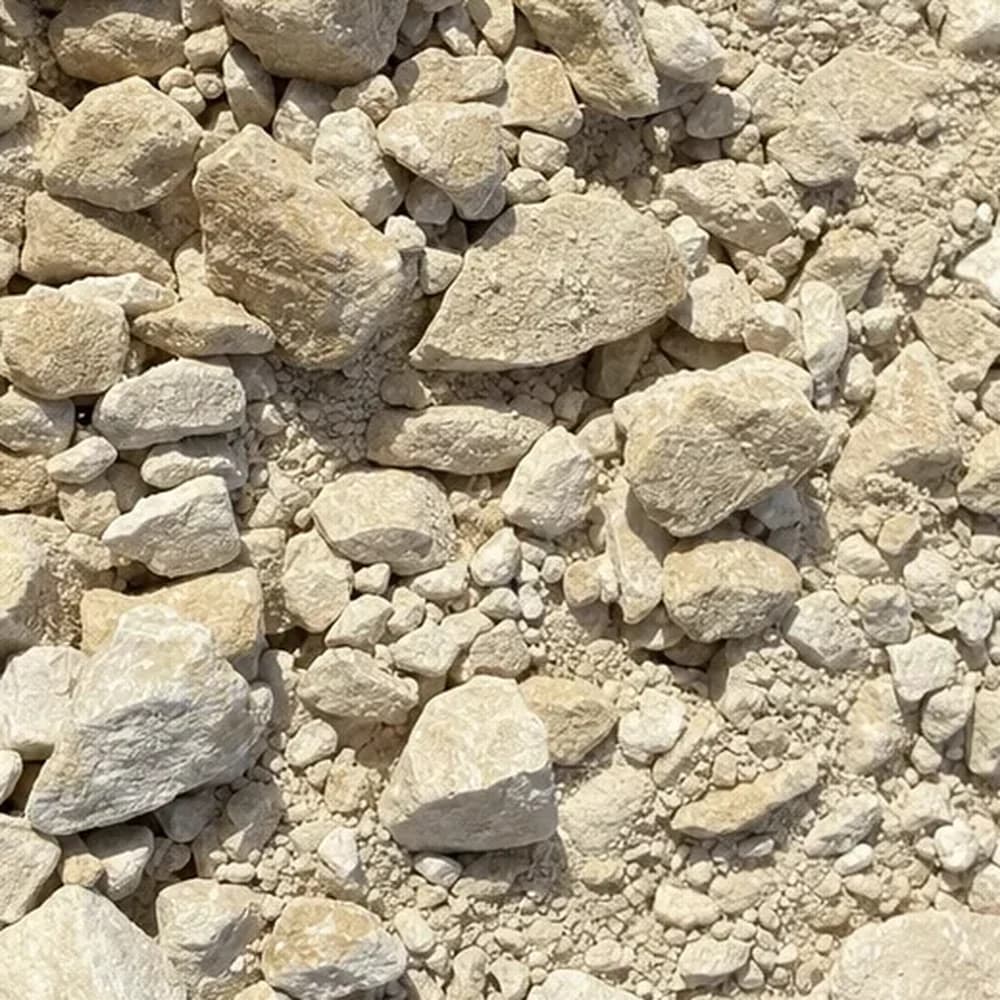
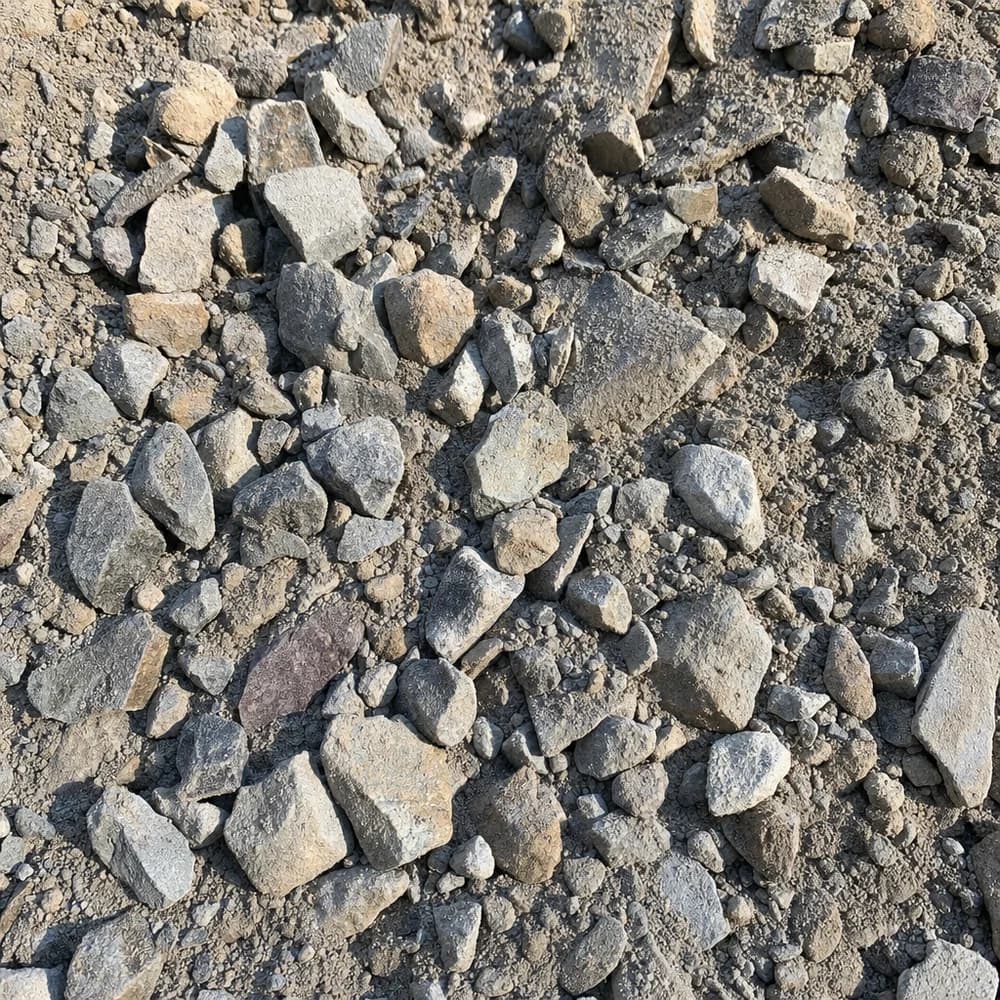
On the clay side of a valley, or anywhere the ground holds water, it needs a base. Strip the sod and topsoil, shape the route with a slight crown or a cross fall so water leaves it, lay a permeable landscape fabric, then build a compacted base of 2A Modified or Screenings before the surface stone goes on. Screenings are the usual choice for a foot path because they pack firm at a shallower depth than base stone and give a solid feel underfoot.
The fabric is worth the trouble on either ground. Without it, fine stone migrates into soft soil and the path thins out year by year.
What depth do I spread, and how does it feel at that depth?
This is where most paths go wrong, and it goes wrong in the same direction every time: too deep. The calculator's own guide puts landscaping work around 2 inches, and a foot path is landscaping work.
Two to two and a half inches of surface stone over a compacted base gives a path you can walk without thinking about it. Push past three inches and the layer stays loose, your heel sinks, and a wheelbarrow will not track straight. Walking it in over the first few weeks does most of the settling for you; a light pass with a plate compactor or a hand tamper speeds it up, though this stone will never lock up like a base material because it is not meant to.
How do I stop it washing off a sloped path or into the lawn?
Two moves, and both are about the edge.
Set the path below the level of the ground beside it, or give it a hard edge: steel, aluminum, timber, brick or a set stone curb. A path that finishes flush with the lawn feeds the mower a handful of stone every summer.
On a slope, the edge alone is not enough. Water running down the path carries the fines with it, so break the run: a shallow cross fall that sheds water sideways, a step or a timber riser every so often on a steeper grade, and somewhere at the bottom for the water to go that is not the middle of the lawn. Where the path crosses a swale, let the swale stay a swale and bridge it rather than filling it.
How many cubic yards does a 40 foot bed path take?
Hypothetical examples. Area in square feet, times depth in feet, divided by 27.
| Example job | Material | Working | Cubic yards |
|---|---|---|---|
| Bed path 3 ft x 40 ft, 2.5 in surface | Walkway gravel | 120 sq ft x 0.208 ft = 25 cu ft; 25 / 27 | 0.93 |
| Same path, 3 in compacted base | Screenings | 120 sq ft x 0.25 ft = 30 cu ft; 30 / 27 | 1.11 |
| Route to the play area, 4 ft x 60 ft, 2 in surface | Walkway gravel | 240 sq ft x 0.167 ft = 40 cu ft; 40 / 27 | 1.48 |
Read backwards, one cubic yard covers about 162 square feet at 2 inches, or about 108 square feet at 3 inches. A curved path is easier than it looks: measure the center line and treat it as a straight run of the same length. At the weight published on this site's calculator pages for driveway and walkway gravel, about 2,800 lb per cubic yard or roughly 1.40 tons per yard, the bed path surface comes to 0.93 x 1.40, approximately 1.3 tons, and the route to the play area to 1.48 x 1.40, approximately 2.1 tons. Gravel is sold by weight, so put the cubic yards through the gravel calculator to convert before setting a quantity.
Why does the RV pad need a different material?
Because a vehicle does something to stone that a person does not. Three-eighths gravel under a tire displaces sideways, leaving ruts where the wheels sit and a ridge between them, and a heavy trailer parked in one spot presses it into whatever is below.
A pad for an RV or a boat is a base job: a compacted layer of 2A modified, built in lifts on prepared ground, with Driveway Gravel over it if you want a surface that looks finished. A hypothetical 12 by 35 foot pad at 8 inches works out at 420 square feet times 0.667 feet, which is 280 cubic feet, or about 10.4 cubic yards of base stone. That is a different order and a different page.
What has to be ready when the load arrives?
Have the route dug, shaped and based before the surface stone turns up, because a pile of path gravel sitting on the lawn for two weeks kills the grass under it. Pick a drop spot on hard standing near the work that the truck can reach and reverse out of, with clear overhead room, and mark it.
Then choose the quantity and the delivery date on this page. Delivery is arranged at checkout from your ZIP code. If the only access is a narrow lane or a tight gate, raise it through Contact before you book rather than on the morning.
Quickly Calculate How Much You Need
Material: Walkway Gravel
How to Measure
Measure the length and width of your project area in feet
Decide on depth in inches (2" for landscaping, 4" for driveways)
Enter the values above and we'll calculate the tonnage you need
Need help figuring out the right amount? We can help!
Call or text us at (412) 449-9626 and we'll help you calculate the right quantity for your project.
Not sure how much you need? The Gravel Calculator has depth guides, coverage charts and worked examples for this material.
Frequently Asked Questions About Walkway Gravel
Customer Reviews
Ordered walkway gravel from them and it showed up right on schedule. Really happy with how easy it was, 5 out of 5.
Scott G. · Erie, PA · Verified Buyer
Ordered walkway gravel from this company and it showed up on the day they promised. Price felt fair for what I got, and I'm really happy with how it all turned out.
Frank A. · Philadelphia, PA · Verified Buyer
Went with these guys for walkway gravel, and it was just what I ordered. Delivery was smooth and I'm really happy with how it turned out.
Nate G. · Erie, PA · Verified Buyer
Grabbed walkway gravel from them and they kept me updated the whole time. Driver was friendly and really careful about where he placed it.
Nate J. · Scranton, PA · Verified Buyer
Walkway Gravel has 4 verified customer reviews with an average rating of 5 out of 5.
Walkway Gravel delivery across Pennsylvania
- Philadelphia
- Pittsburgh
- Allentown
- Reading
- Erie
- Upper Darby
- Bethlehem
- Scranton
- Bensalem
- Abington
- Lancaster
- Bristol