Fill Dirt Calculator for Pennsylvania Grade Work
Enter your project dimensions
Low ground in this state rarely stays dry. Water perches above the dense till layer in the glaciated northeast and northwest from fall into late spring, clay-rich hillsides in the west hold it and soften, and a hollow beside a foundation collects whatever the roof sheds. Making up that grade starts with a depth, so here is a depth reference before anything else. Then the dirt calculator turns it into cubic yards and tons.
| The job in front of you | Depth to enter | How to arrive at it |
|---|---|---|
| Hollow in a lawn or pasture | Average rise needed, often 3 to 6 in | Measure the deepest point and the shallow edge, then use the midpoint |
| Settled patch over an old stump or trench | 4 to 8 in | String a line across at finished grade and measure down at two or three points |
| Utility or downspout trench | Full open depth, often 12 to 18 in | Depth of the open trench, not the pipe |
| Landscape berm | Half the height at the ridge | Peak height divided by two, because the cross section is a triangle |
| Under a future lawn | Bring up to 4 to 6 in below finished grade | Leave that gap for topsoil rather than filling to the top |
The depth box runs from 0.25 to 24 inches. A fill deeper than two feet is a job to break into passes anyway, because it goes in as compacted lifts rather than one pour.
Entering a hollow, a trench and a berm in one pass
Pick the shape first. Rectangle takes length and width in feet. Circle takes a diameter in feet, straight across the widest point. Multiple areas holds up to five separate pieces and adds them together, which is what to use when a trench, a low corner and a berm are all going in on the same afternoon.
Depth goes in as inches. Choose the material, leave the ten percent for compaction and spillage ticked if the ground will be walked or driven on, and press calculate. The answer comes back as cubic yards, tons and cubic feet at once, and Email my quote sends the figure to yourself.
Three worked jobs on soft Pennsylvania ground
Example only, not a specification. All three are hypothetical inputs.
| Job | Working | Yards | Tons at 1.20 |
|---|---|---|---|
| Trench backfill, 40 ft x 2 ft at 18 in | 80 sq ft x 1.5 = 120 cu ft, ÷ 27 | 4.44 yd³ | 5.3 tons |
| Low spot in a pasture lane, 20 x 19 ft at an average 5 in | 380 sq ft x 0.4167 = 158.3 cu ft, ÷ 27 | 5.86 yd³ | 7.0 tons |
| Berm, 24 ft x 5 ft at an average 14 in | 120 sq ft x 1.1667 = 140 cu ft, ÷ 27 | 5.19 yd³ | 6.2 tons |
Run together in multiple-areas mode those come to 15.49 cubic yards and about 18.6 tons. With the ten percent ticked, 17.04 yards and roughly 20.5 tons.
The problem this solves. A backfilled trench that was ordered to the exact excavation reads level on the day and dips two inches by the following spring. The cause is that loose fill placed in one lift keeps settling for months, and a wet Pennsylvania winter speeds it along. The fix is placing it in 6 to 8 inch lifts, compacting or at least soaking each one, and leaving a lawn repair about half an inch proud so it settles flush.
What a yard of fill weighs, and why the ton figure moves
The site's own published weights are what this calculator uses, and they are approximate.
| Material | lb per cubic yard | Tons per yard |
|---|---|---|
| Fill dirt, dry | ≈ 2,400 | 1.20 |
| Fill dirt, wet | up to 3,000 | 1.50 |
| Topsoil, screened | ≈ 2,200 | 1.10 |
| Garden soil, blended | ≈ 2,000 | 1.00 |
Rain changes the weight of a yard, not the size of the hole, so the volume you calculated stays right through a wet week. What shifts is how hard the material is to move and how well it compacts. Saturated fill smears under a plate compactor instead of tightening, and wheelbarrow work through it is miserable, so aim the work at a dry stretch.
Dirt, soil or topsoil: three calculators, three jobs
These three get mixed up more than any other set on the site, and the difference is what the material is being asked to do.
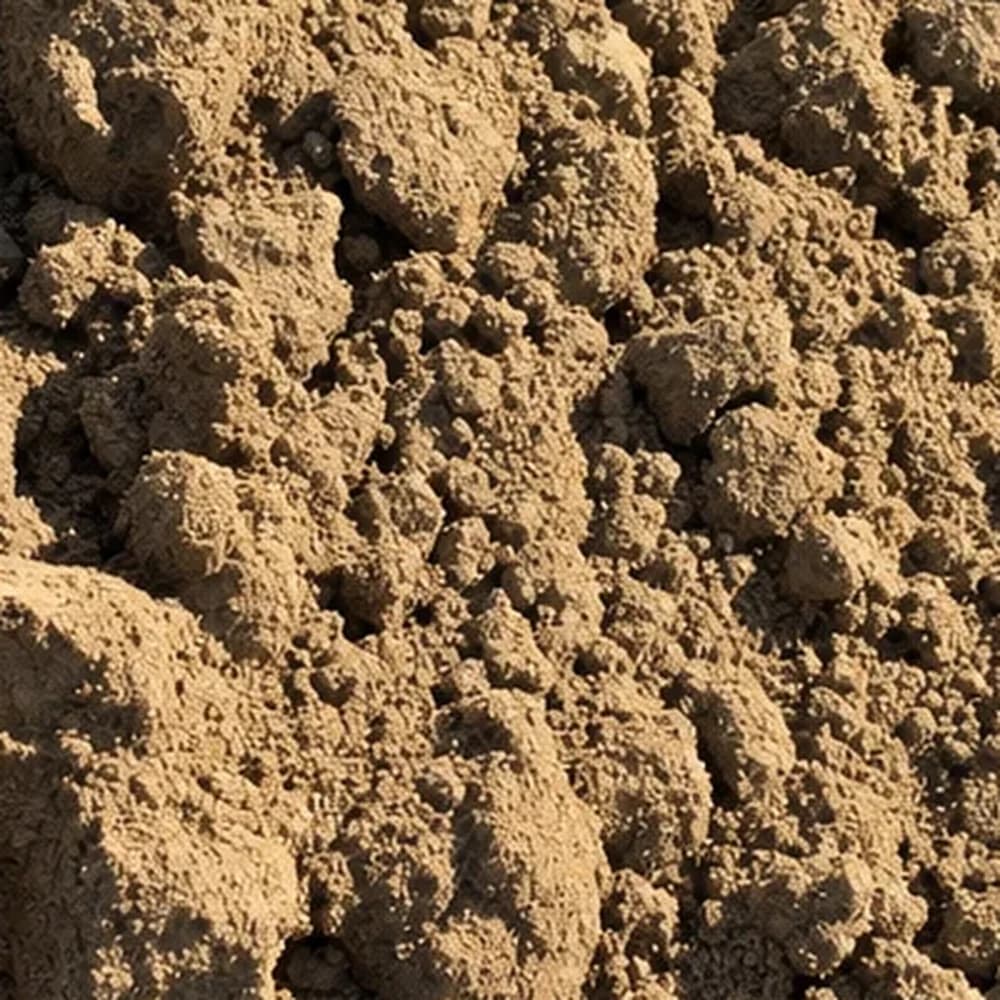
- Fill Dirt is the structural layer. Screened subsoil with little organic content, used to raise grade, backfill and build berms. Size it here.
- Top Soil is the growing layer over the top of it, 4 to 6 inches where grass or vegetables are going. Size that in the topsoil calculator, which carries the lighter 1.10 figure.
- Garden Soil is the blended mix for raised beds and planting areas. The soil calculator is set for it at 1.00 tons per yard.
Filling a lawn repair to the top with fill dirt and seeding it is the mistake this page exists to head off. Bring the grade up with fill, stop short, and finish with topsoil.
Where the fill goes, and where the water goes after
On a hillside lot in the western plateau, water soaking into clay layers on a slope is the main thing that sets ground moving, so a berm or a raised pad that redirects roof and drive runoff onto a steep bank is worth a second look before it is built. In the limestone valleys through the center and southeast, runoff concentrated from gutters and drives onto one spot can open a sinkhole. Neither is a reason to skip the fill. Both are a reason to decide where the water leaves before the truck arrives.
Keep wood, brush and sod out of what gets buried. Organic material rots and the surface above it drops years later.
Once the tonnage is settled, open the product page for the material you sized, choose the quantity and a date, and give the driver a firm, level spot with clear access to tip. Pennsylvania Rock Supply arranges delivery at checkout from your ZIP code. Odd-shaped excavations can go through the contact page if the measurements will not resolve.
Common questions
How do I size a round hollow, like an old tree pit or a ring around a post?
Switch to the circle shape and measure straight across the widest point for the diameter, not from the middle out. A 7 ft pit averaging 8 inches deep is 3.1416 x 3.5 x 3.5 = 38.5 sq ft, then 38.5 x 0.667 = 25.7 cu ft, which is 0.95 cubic yards and about 1.1 tons. For several rings at once, add them as separate areas.
Can I verify the number by hand before I order?
Square feet first, so length times width. Divide your depth in inches by 12 and multiply through for cubic feet. Divide that by 27 for cubic yards, then multiply the yards by 1.2 for tons of dry fill. A result ten or twelve times bigger than you expected almost always means a depth was entered in feet.
I priced the same trench in fill and in topsoil and the tons came out different. Which is right?
Both. The cubic yards are identical because the trench is the same size either way. The tonnage differs because the tool applies each material's own weight, 1.20 tons per yard for dry fill against 1.10 for screened topsoil. Compare the yardage when you are comparing materials, and read the tons when you are placing the order.
Does the ten percent tick box cover settling?
Not on its own. It is an allowance for compaction and spillage on the load, and fill placed loose can drop more than that over a season. Treat it as the floor, place the material in 6 to 8 inch lifts, compact or soak each one, and round the order up where the fill is deep or the ground below it is soft.
The low spot is on a bank. Do I measure the slope or the flat?
Measure across the ground as it lies, following the slope, because that is the volume you are filling. Then take the depth at two or three points rather than one, since a hollow on a grade is usually deeper at its downhill edge, and use the average. If the difference between the ends is more than a few inches, enter the deep half and the shallow half as separate areas.
Related calculators
Cheap by the yard, free to your gate.
Screened fill dirt for grading and backfill, delivered across Pennsylvania.