Topsoil Calculator for New Lawns, Repairs and Topdressing
Enter your project dimensions
Most of the orders this page has to correct start the same way: someone measures a yard that sits low against the patio, works out eight or ten inches of lift, and prices the whole thing in topsoil. Topsoil is the growing layer, four to six inches of it, and it is the most expensive way there is to raise a grade. The lift underneath is a different material and a different calculation. Get that split right first and the topsoil calculator below will size the part that actually grows grass.
Separating the lift from the growing layer before anything is ordered
Run a string line from a fixed point, the patio slab or the door threshold, and measure down to the existing ground at several points across the yard. That tells you how much of the fall is a grading problem. Anything more than the four inches the roots need is build-up, and build-up is Fill Dirt, sized in the dirt calculator and compacted in place before the growing layer goes near it.
An example of the difference: a low corner 20 by 25 ft that needs an average of 6 inches of lift is 500 sq ft by 0.5 ft, or 250 cu ft, which is 9.26 yd3 of fill dirt, about 11.1 tons. Ordering that in topsoil instead would put a foot of soft growing soil where the yard needs structure, and it will keep sinking.
Walking the lawn with a tape before the string line comes down
Lawns are rarely one rectangle. Take the open ground as the biggest rectangle that fits, then add the strip along the drive and the piece behind the garage as their own areas. Multiple areas mode holds five pieces and totals them, and a circle covers an island bed or a turning area. Measure to the edge of the seeded area, not to the fence, and take out anything that will not be soil: the shed footprint, the patio, the beds you are not touching.
Where the topsoil calculator fits in the build
Enter length and width in feet, or the diameter for a circle, and depth in inches anywhere from 0.25 to 24. Choose the material, tick the optional five percent for compaction and spillage, and the three results come back together. Email my quote sends the figure to yourself.
Example only. A 1,800 sq ft lawn, seeded, over a subgrade that has been loosened, with 4 inches of screened Top Soil.
- Depth: 4 divided by 12 = 0.333 ft
- Volume: 1,800 x 0.333 = 600 cu ft
- Cubic yards: 600 divided by 27 = 22.22 yd3
- Tons at 1.10: 22.22 x 1.1 = 24.4 tons
- With the five percent ticked: 23.33 yd3, about 25.7 tons
The depth band is 4 to 6 inches for a seeded or sodded lawn, 6 inches for a flower bed blended into the soil underneath, half an inch to an inch before overseeding, and a quarter to half an inch for topdressing an established lawn. A cubic yard covers 81 sq ft at 4 inches and 648 sq ft spread at half an inch, which is the spread this material is capable of.
Loosening the subgrade so the two layers join
Four inches of topsoil over sealed clay drains like a plugged bathtub, and in this state that clay is often the thing you have just driven a machine over. Roughen the surface at least an inch deep before spreading so water and roots cross the boundary instead of stopping at it. Set the finished grade to fall away from the house, about six inches over the first ten feet.
Wait for ground that has thawed and dried. Spring through late fall is the working window here, and soil spread on wet, soft ground smears rather than rakes.
Judging a load of screened topsoil as it comes off the truck
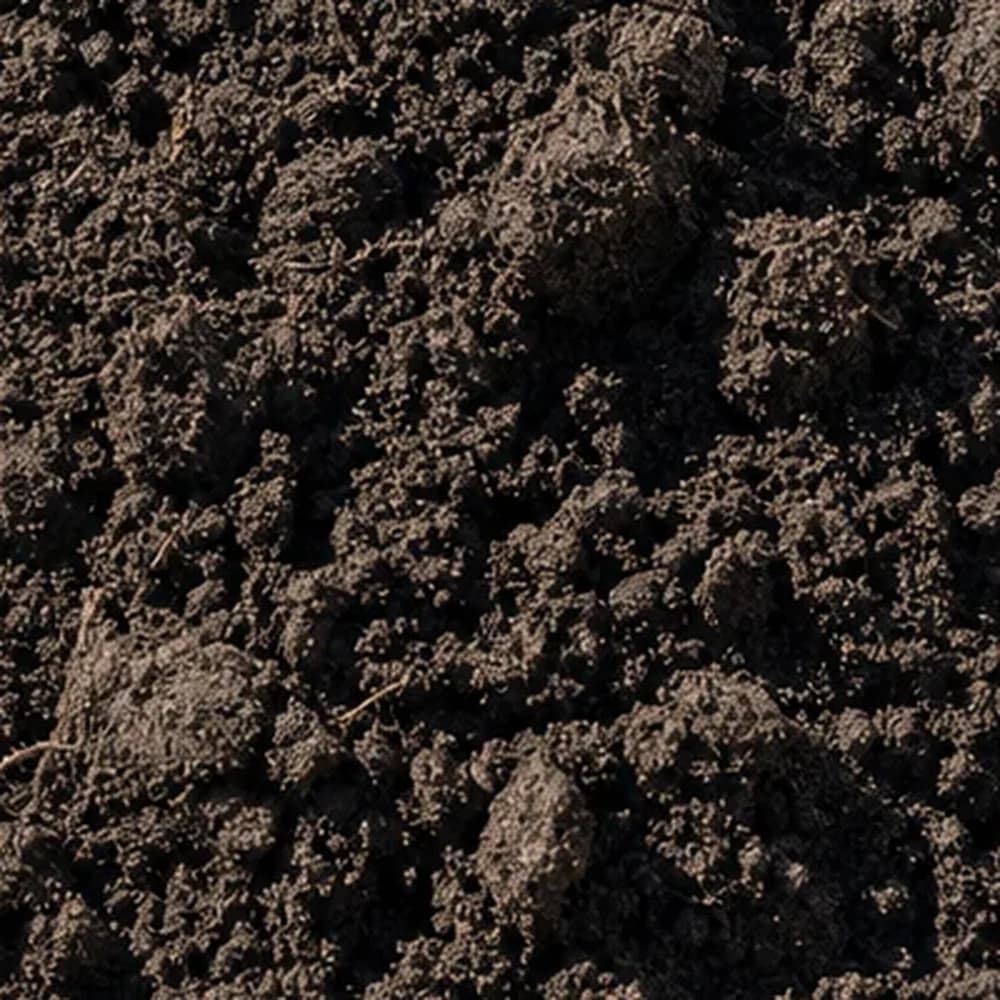
Screening takes out the stones, roots and clods, which is most of the raking saved. Good screened topsoil is dark, crumbles in the hand and smells earthy. Squeeze a damp handful: it should hold as a loose ball and break when prodded. A slick ribbon means heavy clay, and a handful that will not hold at all is mostly sand. Gray color or a sour smell points to wet, airless storage, and visible white rhizomes bring weeds with them. Photograph anything that looks wrong before it gets spread.
Book the delivery for the week the rake comes out. A pile that sits through a wet spell can weigh a third more a shovelful.
Spreading, settling and the half-inch footprint
Spread in passes rather than one heap at a time, and firm the soil without stamping it. A footprint in settled topsoil should sink about half an inch. Deeper than that and it will keep going down under the new lawn; shallower and you have compacted the layer you just paid to bring in.
Topdressing an established lawn works to different limits. Keep it to half an inch so the grass grows through, and if you are raising the surface by more than an inch, take the turf off first. Buried sod breaks down unevenly and leaves lumps for a year. A 4,000 sq ft lawn at half an inch is 166.7 cu ft, or 6.17 yd3, about 6.8 tons.
What 2,200 pounds of screened topsoil actually covers
Topsoil is sold by the cubic yard, so the yard figure is the one to set the quantity from. This site publishes screened topsoil at about 2,200 lb per cubic yard, or 1.10 tons, which is approximate, and a soaked yard runs heavier without covering any more ground. Cubic feet is the figure for wheelbarrow counts.
For beds you are planting into rather than lawn, the blended material and the bed depths are on the soil calculator. Once the yardage is set, open the product page, choose the quantity and the date, and give the truck firm ground with clear access to the tipping spot. Delivery is arranged at checkout by ZIP code. A lawn shape that will not break into pieces can go through the contact page.
Common questions
Is five percent enough on a lawn where the subgrade has just been ripped up?
Usually not on its own. Loosened ground takes some of the first pass into itself, and the five percent box is sized for spillage and ordinary settling. On a freshly worked subgrade, tick it and add a yard or two, because coming back for a small top-up load after the seed is down is the worst time to be moving soil.
The yard falls away from the house. Do I measure the slope or the flat distance?
Along the ground, since that is the surface being covered, and a sloped lawn measures longer than it looks on a plan. Keep the depth constant down the slope unless you are deliberately building the grade up at the bottom, and if you are, that lower section is a separate area with its own depth.
The lawn wraps around the garage in an L. How do I enter it?
As two rectangles in multiple areas, not one shape. Run the main lawn its full length, then measure the side strip starting where the main piece ends. Counting the corner twice on a 4-inch lawn is about a yard of soil per 80 square feet of overlap.
Do the bed edges and the driveway apron count in the area?
No. Measure only what is getting topsoil. Beds that are staying as they are, the apron, the shed pad and any paving all come out of the total, and on a small lot those exclusions can be a fifth of what the tape first suggested.
I need to raise the grade and then grow grass on it. How do I split the order?
Two calculations and two materials. Take the lift in fill dirt, compacted in place, then size the top 4 inches in topsoil here. They carry different weights per cubic yard and different jobs, and putting the whole depth in topsoil is what leaves a lawn that keeps settling.
Related calculators
Lawn math done? Soil's on us to deliver.
Screened topsoil by the cubic yard, free delivery across Pennsylvania.