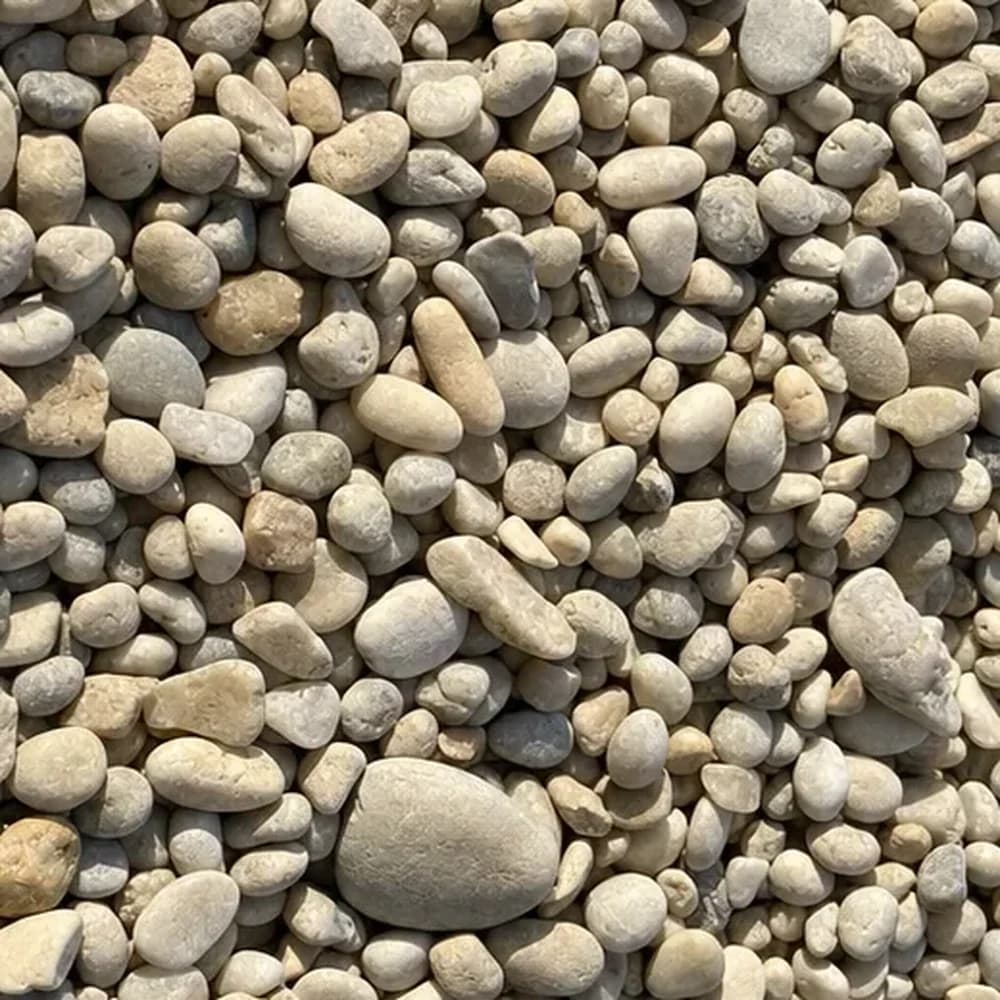
Pea Gravel Calculator for Paths, Patios and Play Areas
Enter your project dimensions
Rounded stone does not stay put on a grade, and a lot of Pennsylvania back gardens are on one. That single fact decides most of the depth choices below, so they come first and the pea gravel calculator follows. Type one of these into the depth box and the tonnage looks after itself.
| The surface you are covering | Depth to enter | What that depth is doing |
|---|---|---|
| Garden path on level ground | 2 to 2.5 in | Covers the base without feeling loose underfoot |
| Seating area over compacted screenings | 2 to 3 in | Deep enough that the base does not show through |
| Dog run | 2 to 3 in | Drains after rain and rinses clean |
| Path or pad on more than a slight grade | 2 in, inside a raised edge | A thin contained layer travels less in a summer storm |
| Playground fall zone | 9 to 12 in | Loose fill at the depth the equipment manual specifies |
Below 2 inches the ground shows through in the traffic line within a season. Above 3 inches it gives under every step, which is pleasant on a beach and tiring on a path to the shed. The fall zone figure is a different kind of number entirely, and it is why a play area outruns every other job on this page by a distance. What that row buys is landscape pea gravel, not certified playground surfacing: the required depth, the fall-zone footprint and the maintained depth all come from the equipment manufacturer's instructions rather than from us.
Length, width, diameter, and a depth the box will actually take
Pick rectangle, circle, or multiple areas, which holds up to five separate pieces and totals them. Rectangles take length and width in feet, circles take a diameter in feet measured straight across the widest point. Depth goes in as inches and the box accepts 0.25 to 24, so a 12 inch fall zone fits comfortably.
Choose the material, leave the optional five percent for compaction and spillage ticked if you want an allowance, and press calculate. Cubic yards, tons and cubic feet come back together, and Email my quote will put the figure in writing.
Three jobs of very different size, worked through
Examples only, hypothetical measurements.
| Job | Working | Cubic yards | Tons at 1.40 |
|---|---|---|---|
| Garden path, 40 ft x 3 ft at 2.5 in | 120 sq ft x 0.2083 = 25 cu ft, ÷ 27 | 0.93 yd³ | 1.3 |
| Round landing at the porch steps, 9 ft across at 3 in | 63.6 sq ft x 0.25 = 15.9 cu ft, ÷ 27 | 0.59 yd³ | 0.8 |
| Swing-set fall zone, 19 ft x 14 ft at 10 in | 266 sq ft x 0.8333 = 221.7 cu ft, ÷ 27 | 8.21 yd³ | 11.5 |
The path and the landing together are barely two tons. The fall zone on its own is more than eleven, for an area only half as large again as the path and landing combined. Depth, not area, is what makes the difference, and it is the number worth checking twice before anything is ordered.
What 2,800 pounds a yard means when you spread it
Pea gravel is published here at about 2,800 lb per cubic yard, or 1.40 tons per yard, which is approximate and the same figure this site uses for clean crushed stone. Rounded does not mean light. The stones pack closer than people expect, so a ton of it goes less far than the wheelbarrow-load impression suggests.
At 2 inches deep a ton covers roughly 116 square feet. At 3 inches, about 77. At a 12 inch fall zone, about 19. That last figure is the one that catches people out on a play area: a ton that would surface most of a garden path disappears into four square yards of swing-set ground.
The problem this solves. A path laid in spring is bare in its traffic line and heaped at the low end by August. The cause is rounded stone with nothing holding it, on ground with more fall than it looked like from the kitchen window. The fix is edging in steel, aluminum, timber or paver, set about an inch proud of the finished surface, not flush with it. Beyond roughly five percent grade, edging alone is not enough: put a stabilizing grid under it, or switch that stretch to angular crushed stone that interlocks.
Ordering over, and where the extra earns its keep
Leave the five percent ticked if you like, then round the tonnage up to the next quarter ton regardless. On a small job that costs very little and saves a second delivery, and on a loose surface the extra always finds a use. Keep a bucket or two back from the order and top the traffic line every couple of seasons, which is what a pea gravel path needs instead of repair.
Spring once the ground has drained, through to late fall, is the working window in this state. Rake the surface level twice a year and the layer stays even. Choose a firm, level drop spot with clear access for the truck to back in and tip, and a tarp underneath if the pile is landing on a drive.
Rounded, crushed or decorative: three calculators for three surfaces
These get swapped for each other constantly, so plainly:
- 3/8" Natural Pea Gravel is the rounded 3/8 inch stone this page sizes. Bare feet, level paths, play areas, dog runs.
- Crushed walkway and driveway gravel has angular edges that lock together, so it holds a slope and a busy route far better. Size it in the gravel calculator, which carries the same 1.40 weight.
- River Rock is larger and decorative, meant for beds and creek beds rather than walking surfaces. The river rock calculator is weighted lighter at 1.35 tons per yard.
A single garden often uses two of them: crushed stone on the sloping stretch of path, rounded stone where people sit. Under a seating area, 2 inches of compacted Screenings below the pea gravel keeps chair legs from sinking in.
Take the tonnage to the product page, set the quantity and the date there, and delivery is arranged at checkout from your ZIP code. Anything that will not break into five measurable pieces can go through the contact page.
Common questions
How do I size a round area, like a tree surround or a sitting circle?
Use the circle shape and enter the diameter, measured straight across the widest point rather than out from the middle. A 10 ft circle at 2.5 inches is 3.1416 x 5 x 5 = 78.5 sq ft, then 78.5 x 0.2083 = 16.4 cu ft, which is 0.61 cubic yards or about 0.85 tons. If a fire ring or a planter sits in the middle, work out its area the same way and subtract it, though on a job this size most people keep the round-up.
Can I check the answer myself before ordering?
Length times width for square feet, or 3.1416 times the radius squared for a circle. Divide the depth in inches by 12 and multiply through for cubic feet, divide by 27 for cubic yards, and multiply the yards by 1.4 for tons. If your figure and the screen disagree by roughly twelve times, a depth went in as feet instead of inches.
The same path came back at a different tonnage when I switched materials. Why?
The volume is fixed by your measurements, the weight is not. This calculator applies each material's published weight, so 1.40 tons per yard for pea gravel and crushed stone, 1.35 for river rock, 1.45 for screenings. Compare cubic yards when you are deciding between materials, and read the tons when you place the order.
Is five percent enough extra on a loose stone surface?
For spillage, yes. For the way a loose surface behaves in its first year, no, and that is not what the box is for. Rounded stone migrates into the low spots and the traffic line, so the practical allowance is a quarter ton rounded up and kept back for topping up rather than a percentage added at checkout.
My path runs down a bank. How should I measure it, and does the depth change?
Run the tape along the ground on the slope, since that is the surface being covered, and a run measured level will read short. Keep the depth at 2 inches rather than 3 on the sloping stretch, and set the edging an inch above the finished level so it actually holds. Where the fall is steeper than about one foot in twenty, crushed angular stone is the better material for that section.
Related calculators
Under two tons covers most patios.
3/8 inch natural pea gravel, priced by the ton, delivered free.