River Rock Calculator for Borders, Splash Zones and Beds
Enter your project dimensions
Late March is when most of these beds get planned. The snow comes off a metal roof in a week, the gutters run all day, and the strip along the foundation turns into a trench of splashed mud against the siding. Rock goes in during the dry spell that follows, which in most of Pennsylvania means from the thaw through spring. The river rock calculator below turns that strip and the splash pads under the downspouts into cubic yards, tons and cubic feet before anything is ordered.
A 38-foot foundation border, sized while the gutters are still running
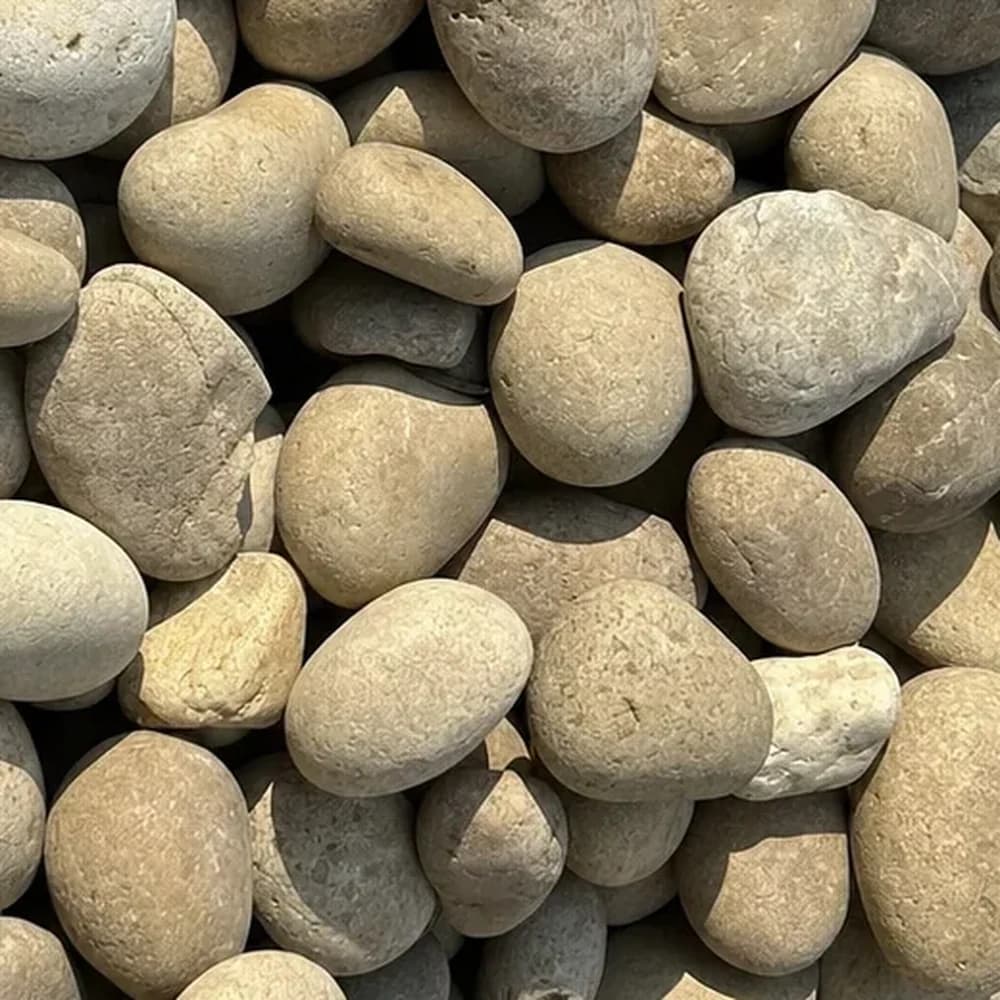
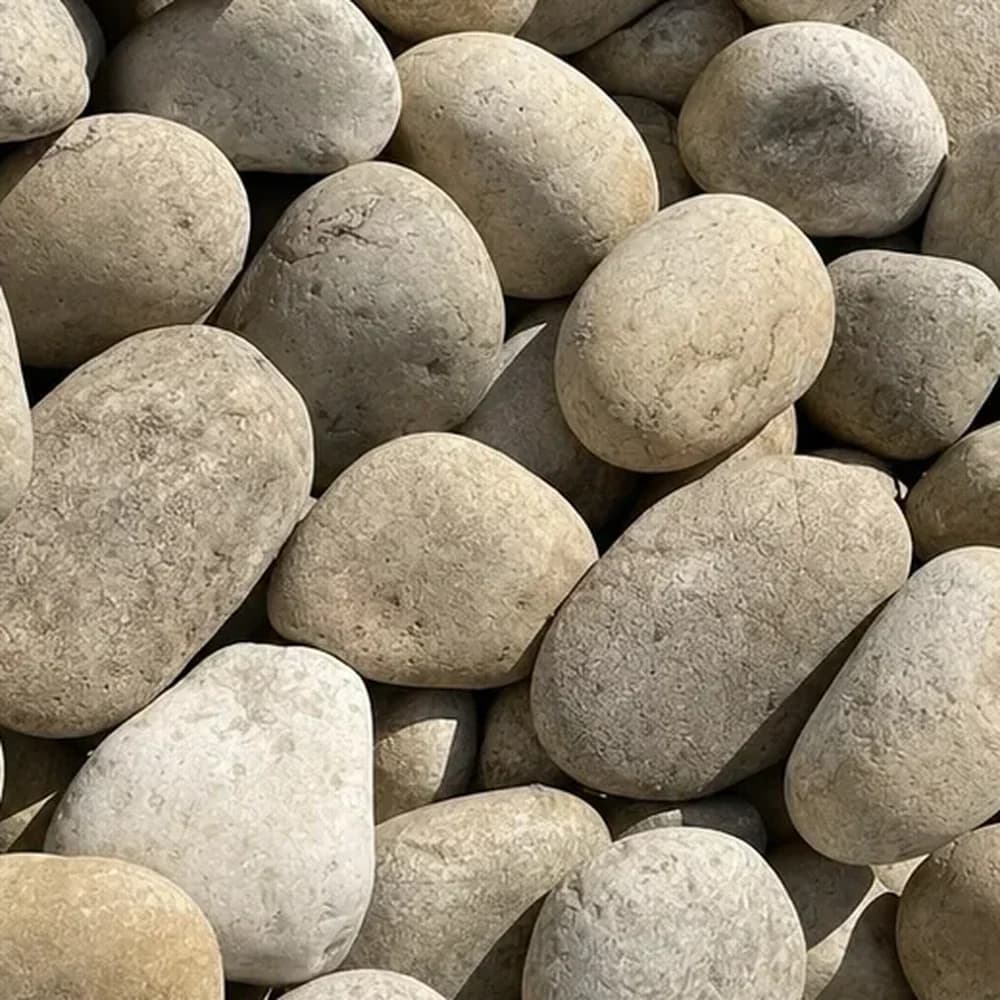
Example only. A border 38 ft long and 3 ft wide along two sides of a house, laid 3 inches deep in 1 to 3 inch river rock, plus four splash pads of 3 by 4 ft under the downspouts, laid 4 inches deep in large river rock so the water does not scatter it.
- Border area: 38 x 3 = 114 sq ft
- Border volume: 114 x 0.25 ft = 28.5 cu ft, so 28.5 divided by 27 = 1.06 yd3
- Splash pads: 3 x 4 = 12 sq ft each, four of them is 48 sq ft
- Splash volume: 48 x 0.333 ft = 16 cu ft, so 16 divided by 27 = 0.59 yd3
- Both together: 1.65 yd3
- Tons at 1.35: 1.65 x 1.35 = 2.23 tons
- With the five percent ticked: 1.73 yd3, about 2.34 tons
Entered as multiple areas, the border and the four pads come back as one total. The pads carry the deeper figure because the stone in them is bigger, which is the rule this page turns on.
Rectangles, a circle and five beds through the river rock calculator
Pick a shape first: rectangle, circle, or multiple areas, which takes up to five pieces and adds them. Length, width and diameter are entered in feet, and a circle wants the diameter measured straight across the widest point. Depth goes in as inches, anywhere from 0.25 to 24. Choose the material, tick the optional five percent for compaction and spillage, and the three results appear together. Email my quote sends the figure to yourself.
A ring around a tree is the one shape people get wrong. An 8 ft ring at 3 inches is 3.1416 x 4 x 4 = 50.3 sq ft, or 12.6 cu ft, or 0.47 yd3, which is about 0.63 tons. Entering the radius instead of the diameter would have quartered that.
Why a delivered ton looks smaller than the number suggested
River rock is published on this site at roughly 2,700 lb per cubic yard, or 1.35 tons per yard, and that figure is approximate. Turn it round and a ton is only about three quarters of a cubic yard, which is why a tipped ton of rock looks like a modest heap next to the same weight of mulch, which runs nearer 600 lb a yard and arrives as a small mountain.
Cubic yards tell you the size of the pile. Tons are what the stone is weighed and sold in, so tons is the figure the order carries. Cubic feet is the wheelbarrow number.
Coverage per ton falls away fast as stone size goes up, because bigger stone needs a deeper layer to hide the ground: about 120 sq ft per ton at 2 inches in 3/4 to 1 inch rock, roughly 80 sq ft at 3 inches in 1 to 3 inch rock, and near 53 sq ft once large rock is laid 4 to 5 inches deep.
Ordering long on the edge that shows
Round up rather than down on a decorative bed. The front edge of a border is where the layer thins first, where a mower throws stone into the grass and where a season of rain washes it into the lawn, so any surplus has a home. The five percent tick box covers spillage and a little settling, not a bed that was measured at the wrong depth.
If fabric shows through after spreading, the bed is short of depth, not short of material. Lay non-woven fabric first and pin it, except where the rock is carrying water, in which case the stone gets wrapped in the fabric rather than laid on top of it.
The stone size decides the layer, so choose it first
Set the layer at roughly twice the diameter of the stone. That means 2 inches for 3/4 to 1 inch material, 3 to 4 inches for 1 to 3 inch rock, and 4 to 5 inches for larger stone. Choosing size before depth is the whole trick on this page, and it is why two beds of identical area can differ by a ton.
For a bed of mixed sizes, lay the smaller rock as the base and set the anchor stones a third into the ground so they look settled rather than dropped. Wash the bed down once it is in; delivered stone carries dust that dulls the color until it gets a hose.
Which of the three rock calculators belongs to your job
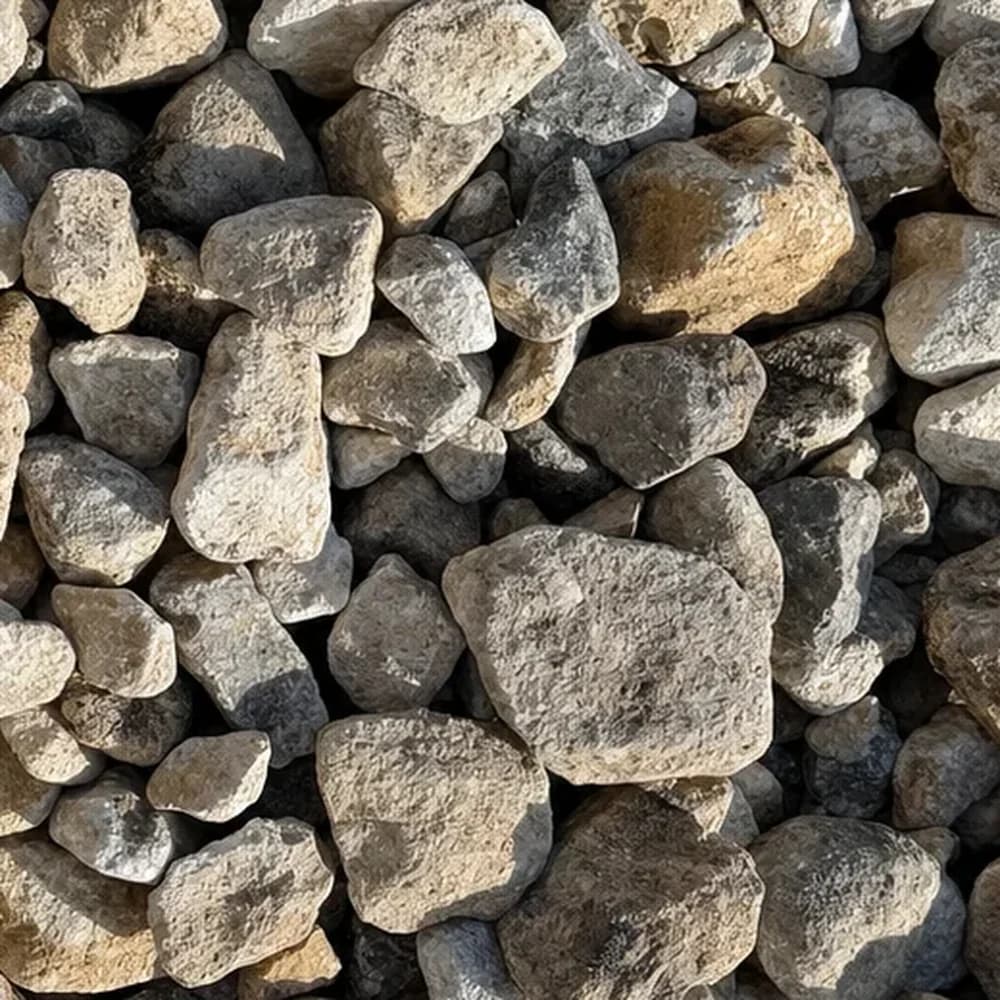
Stay here for decorative cover and splash work in rounded stone. Go to the pea gravel calculator when the surface is a path or a play area that people walk on, since 3/8 inch rounded stone runs a different weight and a much shallower layer. Use the gravel calculator for drive surfaces and patio work, and the stone calculator when the bed is doing drainage rather than decoration and the order will be Drain Rock or a clean crushed grade.
With a tonnage settled, open the product page, set the quantity and the delivery date, and pick a tipping spot on firm ground close to the beds. Delivery is arranged at checkout by ZIP code. A bed shape that will not break into rectangles and circles can go through the contact page.
Common questions
The results give both tons and cubic yards. Which one do I put on the order?
Tons. Rock is weighed and sold that way, and the yard figure is there so you can picture the pile and compare it against the space you have cleared for it. The tool converts between them using the published weight of the material you selected.
Is the depth I type the loose rock or the level after it beds in?
Type the finished depth you want to see in the bed. Decorative rock is not compacted, so it settles only slightly, mostly into the fabric and the soil below. That small loss is what the five percent tick box is for.
How do I size a ring of rock round a fire pit?
Switch to circle mode and enter the full width across the ring, then work out the pit itself as a second circle and subtract it if it is large enough to matter. On a ring under about 12 ft across, the pit rarely moves the order by more than a tenth of a ton, and most people keep the round-up.
Can I confirm the tonnage with a pocket calculator before ordering?
Multiply the bed length by its width, divide the depth in inches by 12 and multiply through to get cubic feet, divide by 27 for cubic yards, then multiply by 1.35. A 10 by 12 ft bed at 3 inches is 30 cu ft, 1.11 yd3, and about 1.5 tons.
Two beds of the same size and depth came back at different tonnages. What changed?
The material selection. Each product carries its own published weight per cubic yard, and rounded river rock is lighter per yard than crushed stone or a base blend, so the same hole in the ground reads lighter in rock. Set the material before you read the tons.
Related calculators
Rock beds are a one-time buy.
River rock, large river rock and drain rock by the ton, free delivery included.